Psychological Pricing Strategy: Why Does $19.99 Sell Better Than $20.00?
Read Also: 5 Best POS Apps for Cafes & Coffee Shops (Top Picks 2026)
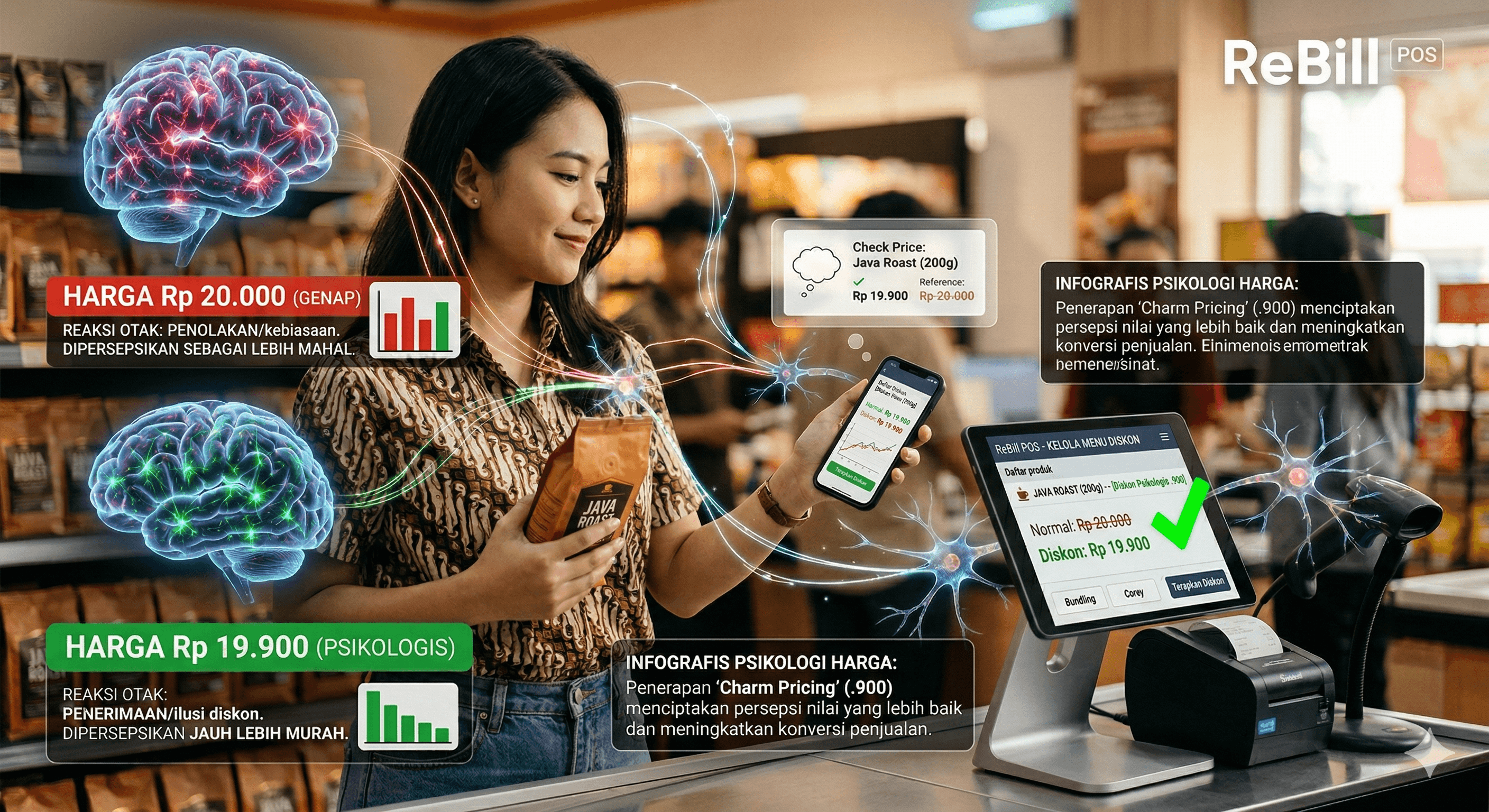
*Why does $19.99 sell better than $20.00?* The answer lies in a psychological pricing strategy known as the *Left-Digit Effect* and *Charm Pricing*. The human brain processes numbers from left to right. When seeing a price of $19.99, the brain subconsciously focuses on the "19" and perceives it to be in the "teen" range, rather than the twenty-dollar range. This creates a cheap price illusion that triggers consumer behavior to make faster purchasing decisions compared to seeing a round price like $20.00.
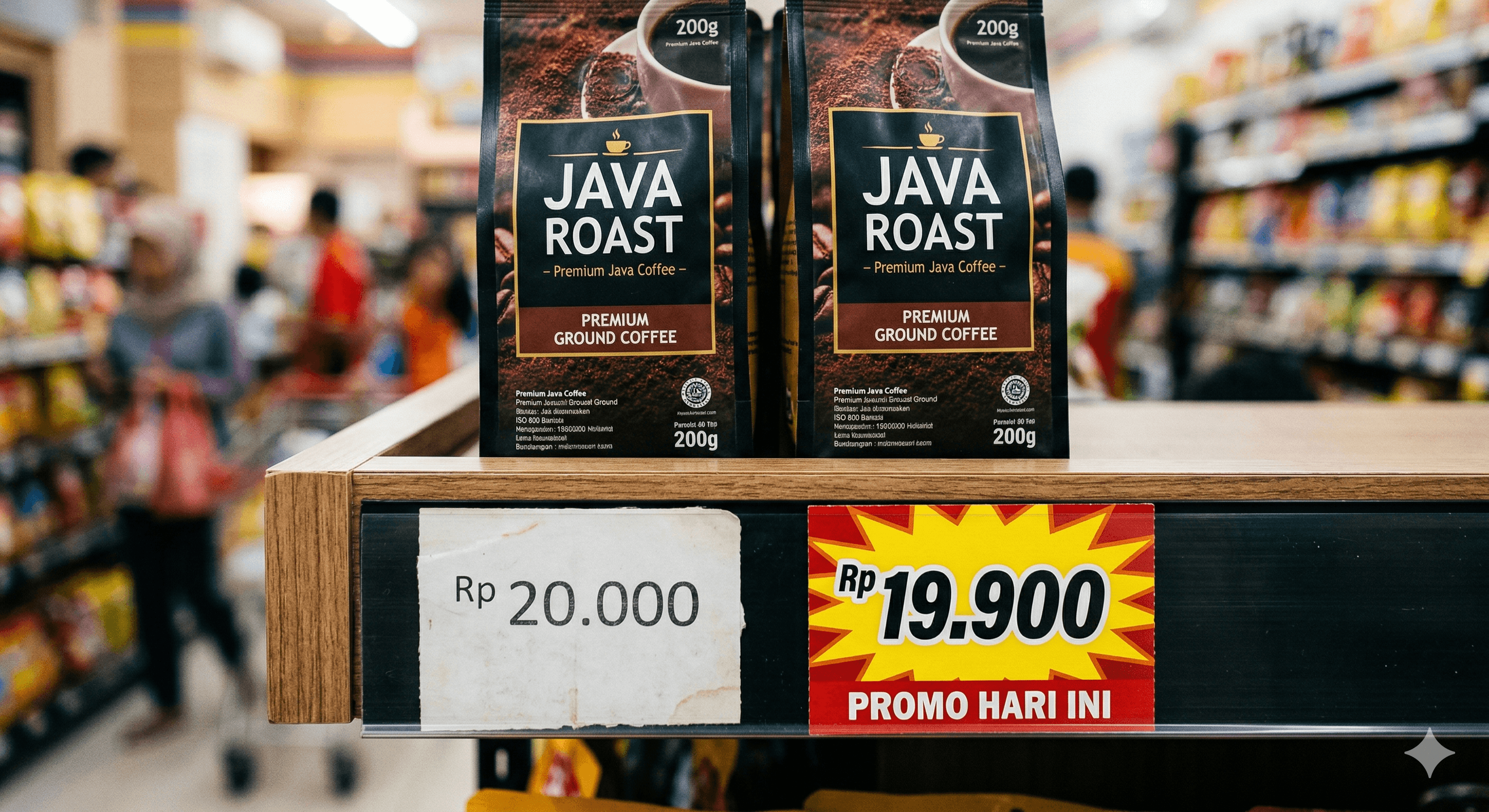
Have you ever noticed when shopping at a convenience store or *supermarket* that almost all price tags always end in a 9 or 99? *Why do supermarket prices end in 99?* Is this just a coincidence, or is there a big secret behind it?
In the business world, how to determine the selling price is not just about calculating capital plus *profit margin*. Pricing is closely related to psychological pricing.
If you are looking for ways to increase sales turnover, understanding how psychological pricing influences buyers is the ultimate key. Let's dissect this product pricing strategy and how you can implement it in your business without giving your cashiers a headache.
What is Psychological Pricing and Why is it Highly Effective?
Read also: POS App Comparison: Check the Feature and Price Comparisons Here (2026 Update)
Psychological pricing is a product *pricing* strategy that leverages cognitive biases in pricing. This strategy targets the emotional response of customers rather than consumer rationality.
The main goal is one: to create the illusion of a cheap price. When you know how to make prices attractive, customer *price sensitivity* will decrease, and *elastic demand* will sharply increase. This is high-level sales marketing science frequently used in retail pricing strategies and convenience stores.
5 Psychological Pricing Strategies to Attract Buyers
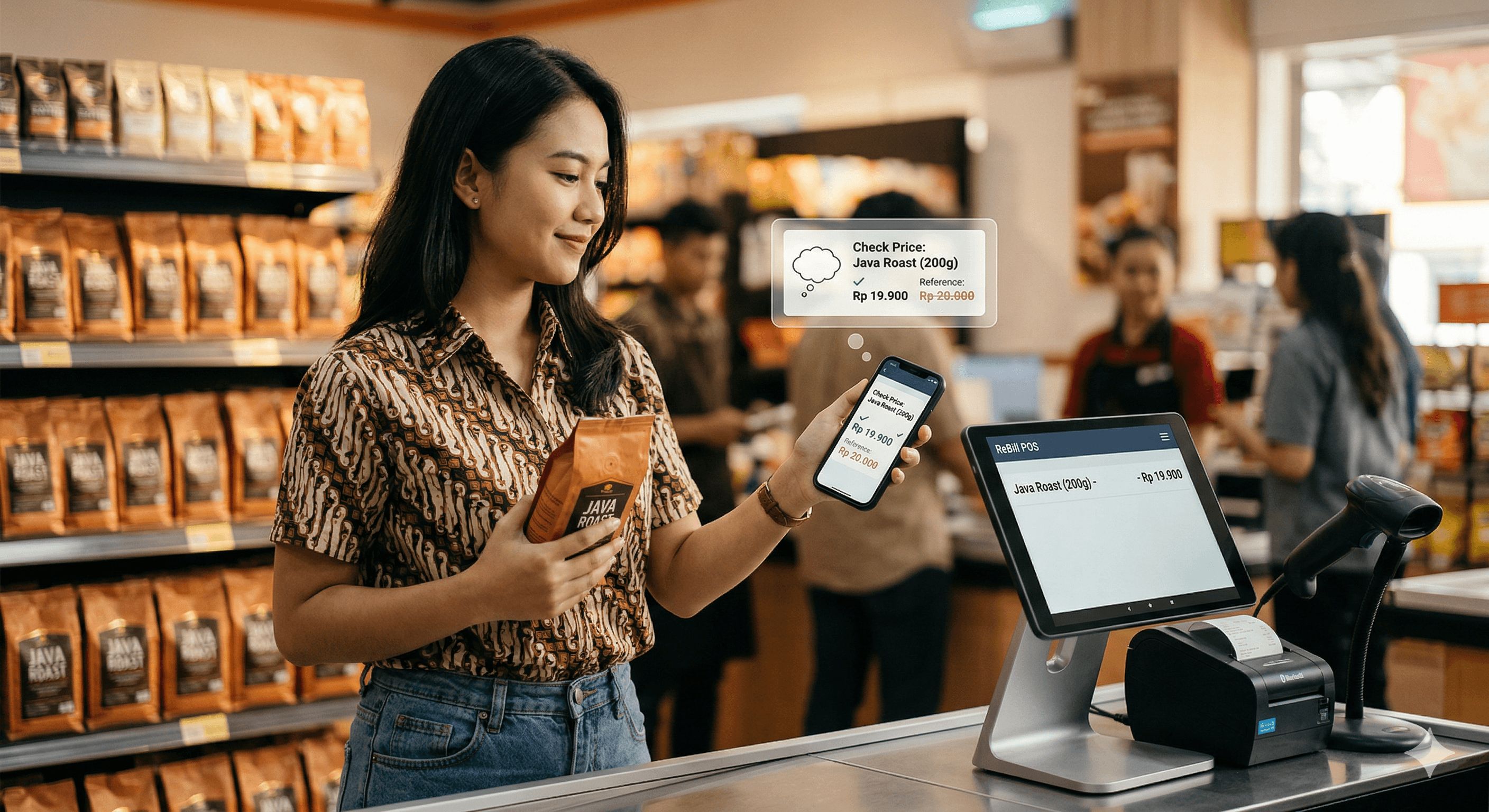
How can you play with prices in a retail store or cafe to boost sales? Here are some examples of pricing strategies that have proven effective as best-selling tricks:
1. Charm Pricing & Odd-Even Pricing
Charm pricing is the technique of reducing a round number to an odd number (ending in 9 or 99). This is the main answer to why prices always end in 9 or the reason behind .99 prices.
- How the left-digit effect works: A price of $99.99 feels significantly cheaper than $100.00 because the leftmost digit changes from a 1 to a 9.
- Odd-even pricing is the opposite. If you want to convey a sense of a discount and a bargain, use odd prices. But if you are selling luxury goods (like a Rolex watch), use even/round prices to make it look elegant and premium.
2. Decoy Pricing Decoy pricing is the trick of presenting a third option (the decoy) to nudge customers into choosing the most expensive option. For example, a cafe might price a Small coffee at $3.00, a Medium at $4.50, and a Large at $5.00. The customer will think, "Wow, for just 50 cents more I can get a Large," and ultimately choose the most expensive tier. This is how to keep customers buying with a higher transaction value (perfectly supporting an upselling strategy).
3. Price Anchoring & Strikethrough Pricing This is the strikethrough pricing technique or discount pricing trick. You set a high initial price (as an anchor in the customer's mind), cross it out, and offer a new price. This triggers a strong perception of a massive discount and serves as a highly attractive discount strategy.
4. Price Bundling Selling several products together in one package at a slightly lower price than buying them individually. This is a very powerful cross-selling strategy and a proven way to get products to sell out faster.
5. Prestige Pricing The exact opposite of a bargain, prestige pricing intentionally sets prices high to create a perception of premium quality (closely tied to perceived value pricing).
Pricing Method Comparison Table
Read also: Free vs Paid POS Apps: Which is More Profitable for the Long Term?
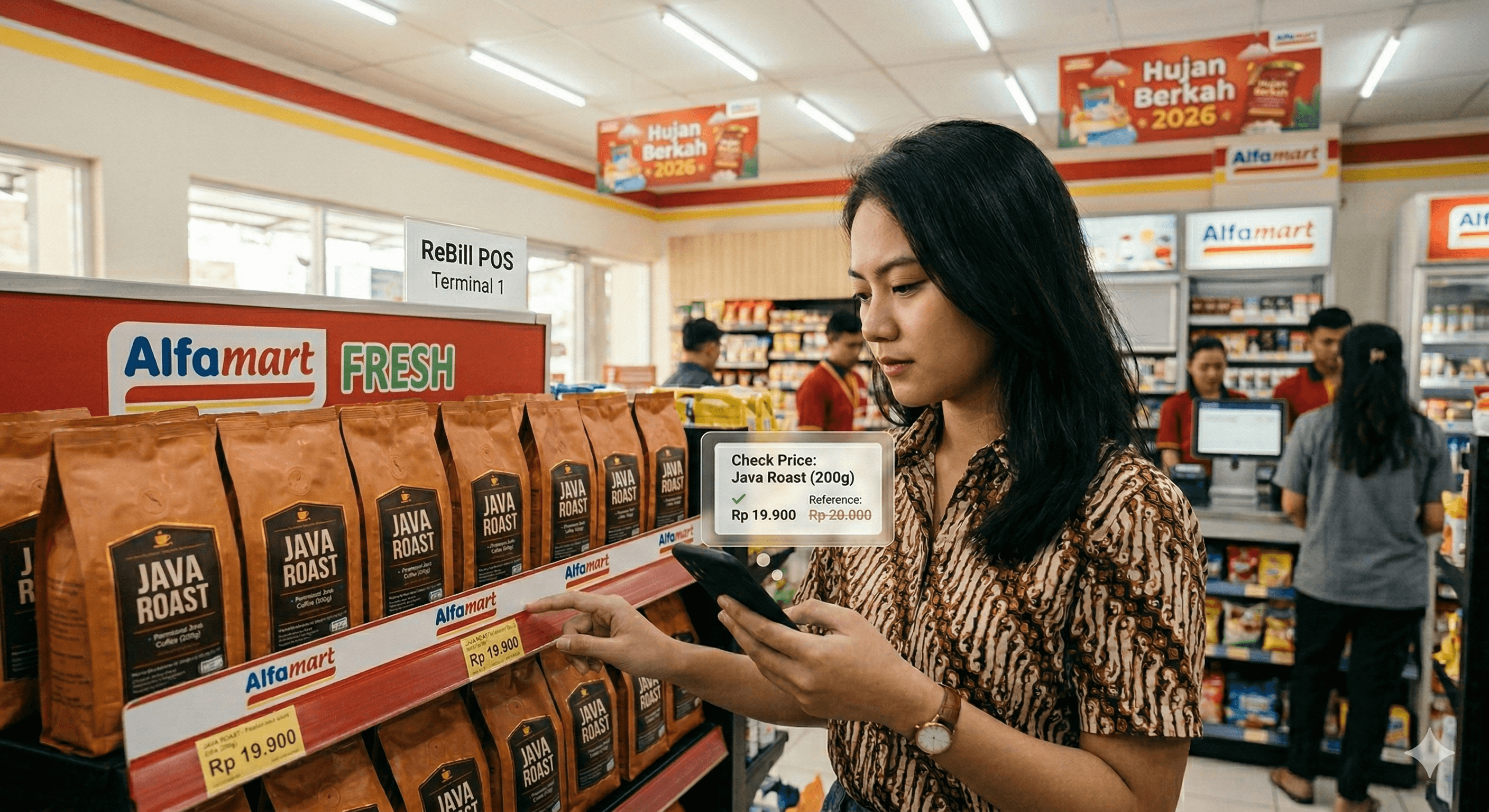
To help you with tips on setting food or retail prices, here is a comparison table of various pricing strategies:
| Strategy Name | How it Works | When to Use It? | Implementation Example |
|---|---|---|---|
| Psychological Pricing | Playing with number perception (e.g., ending in .99). | To drive impulse purchases or discount promos. | $20.00 becomes $19.99. |
| Cost-Plus Pricing | Cost of goods + Profit margin. | To set standard retail margins. | Cost $10 + profit $5 = $15. |
| Competitor-Based Pricing | Matching or undercutting competitor prices. | Entering a highly competitive market. | Competitor sells for $20, you sell for $18. |
| Value-Based Pricing | Pricing based on the perceived value to the customer. | Unique products, strong branding, premium goods. | Specialty craft coffee sold for $8.00. |
The Challenge: Changing Hundreds of Prices Without Confusing Cashiers
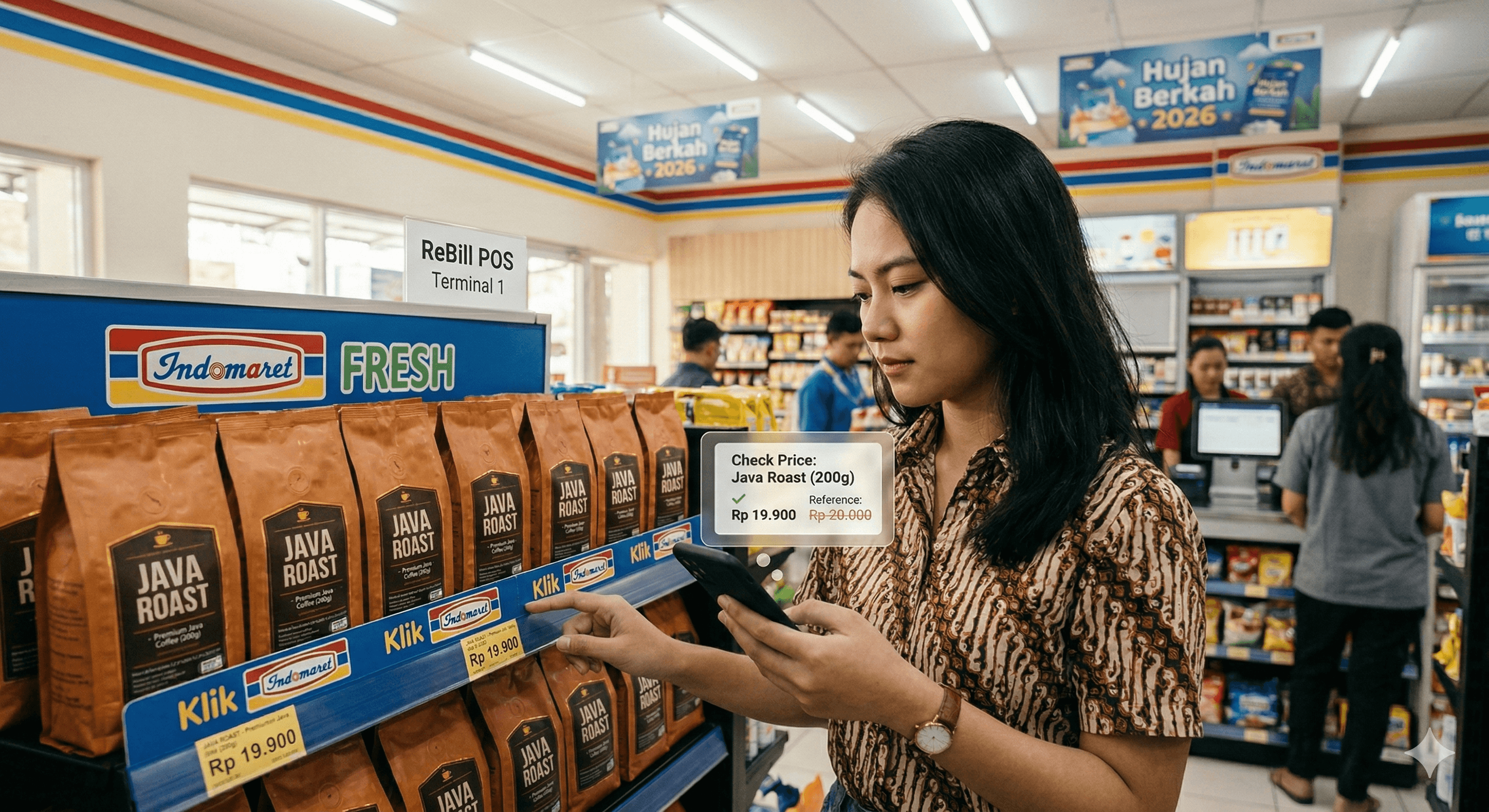
Read also: ReBill POS Review: The Newcomer POS App That Elevates Small Businesses
The theories of pricing neuromarketing and catchy promo phrases sound great for product promotion strategies. However, there is a big problem on the ground: how do you execute it?
Imagine changing hundreds of items to odd prices (like $19.99).
- How do you change prices on the cash register quickly?
- What if manual cashiers make mistakes calculating change because the numbers are complicated? This can cause incorrect pricing issues at the register and customer complaints about price discrepancies between the shelf and the receipt.
Growing businesses can no longer rely on manual calculators. You need an easy-to-change POS app and software to manage pricing automatically.
The Solution: Apply Odd Pricing & Promos Seamlessly with ReBill POS
Read Also: 15 Best POS Apps 2026: POS Recommendations for Culinary, Retail, & SMEs
As the best POS system in its class, ReBill POS is the ultimate answer for those looking for an app to manage discount pricing and execute *pricing* strategies without the headache.
Why do businesses need a POS system like ReBill to manage prices? 1. Easy mass price updates: Through the *cloud* system, you can change the prices of thousands of products to end in .99 in just a few clicks from the *back-office*. Can ReBill POS change prices from a mobile phone? Absolutely! 2. Automated Promo Management: ReBill is a smart POS app with promo features. You simply practice how to set strikethrough prices or 50% discount strategies, and the system will automatically deduct the price when the item is scanned. 3. No More Cashier Math Errors: Using the 99-cent trick is prone to change-calculation errors. With the ReBill POS app, the system automatically calculates the total and the exact change with 100% precision. 4. Smart Analytics: After implementing your strategy, you can view sales reports per product and how to analyze item sales directly from the *dashboard*. You will know exactly whether your $19.99 strategy actually increased revenue compared to last month.
How to use ReBill POS is incredibly *user-friendly*. Whether you are looking for a retail POS app, grocery store POS software, cafe POS app, or a cash register for SMEs, the advantages of ReBill POS can always be relied upon.
Don't let these online best-selling tricks remain just theories. Implement your psychological pricing strategy right now using the affordable POS app from ReBill POS!