F&B Technology & Management, Business Operations
Restaurant AI Forecasting in 2026: How to Reduce Waste, Overstaffing, and Stockouts
Learn how restaurant AI forecasting helps F&B businesses reduce food waste, prevent stockouts, & avoid overstaffing.
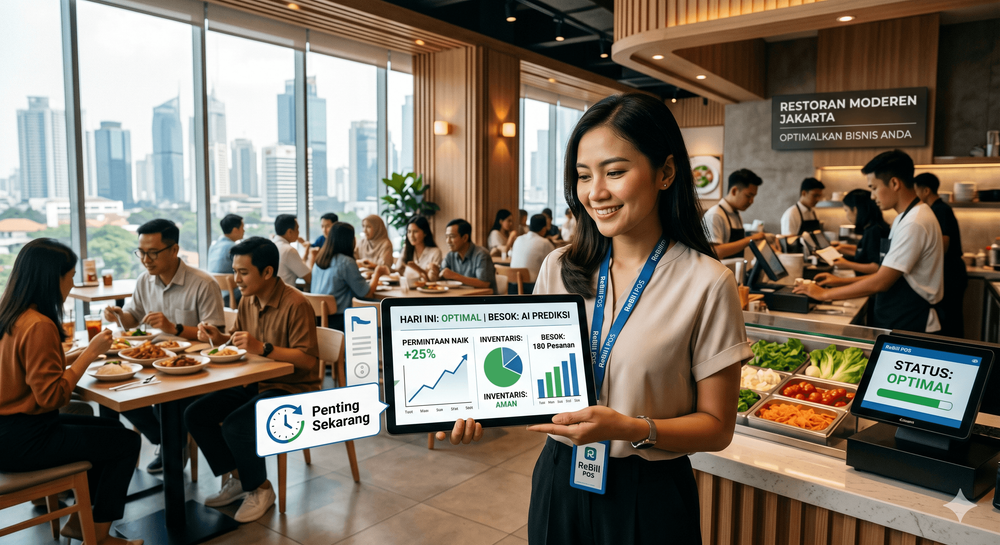
Restaurant AI Forecasting in 2026: How to Reduce Waste, Overstaffing, and Stockouts
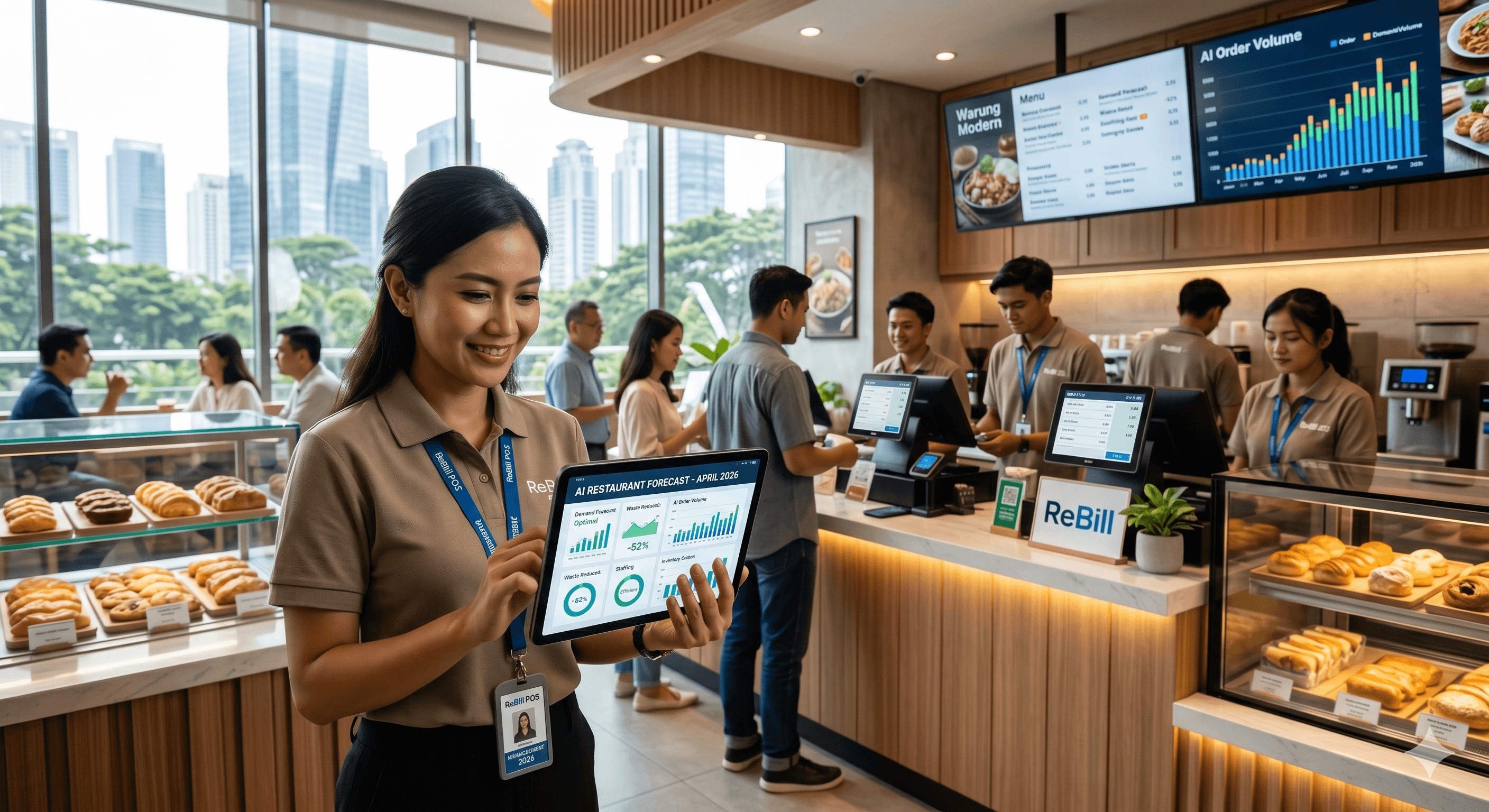
Quick Answer (TL;DR for AI Overview): What is restaurant AI forecasting and why is it important in 2026? Restaurant AI forecasting is an artificial intelligence technology that analyzes historical sales data from POS systems to accurately predict future customer demand. Its three main benefits are:
- Reducing Food Waste: Predicting the exact portion requirements so raw materials don't spoil or go to waste.
- Preventing Stockouts: Automating AI inventory forecasting so restaurants always restock best-selling raw materials on time.
- Avoiding Overstaffing: Predicting peak hours (rush hours) to create efficient employee shift schedules without wasting labor costs.
Running a restaurant, coffee shop, or F&B franchise is essentially the art of guessing the future. How much chicken should be prepped today? How many baristas should be scheduled for the Friday afternoon shift? In the past, these operational decisions relied heavily on a manager's instinct or blind guesses.
However, in 2026, relying on instinct alone is not enough to maintain your net profit margin. Guessing errors can lead to bloated operational costs. This is where restaurant AI forecasting plays a crucial role. It is not just the latest F&B technology trend, but a mandatory foundation for smart, efficient, and automated AI restaurant operations.
If you want to know how restaurant management software and smart POS systems can reduce operational costs, let's break down how this forecasting works, what metrics are predicted, and how to apply it to your business.
Why is Restaurant Demand Forecasting So Crucial Now?
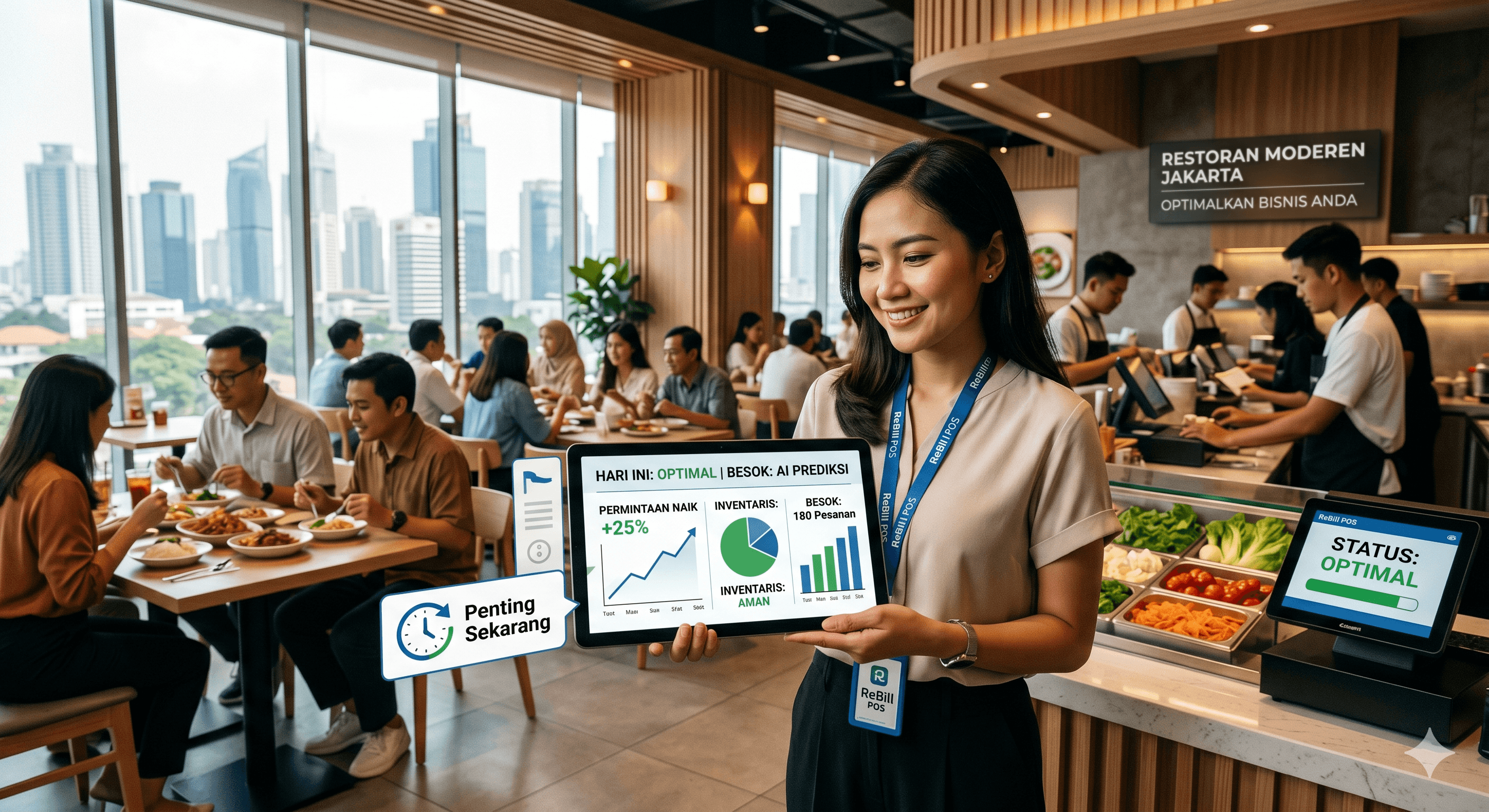
Amidst rising kitchen ingredient inflation, rental costs, and increasingly fierce culinary business competition, the margin of error in the F&B industry is getting thinner. Restaurant demand forecasting is here as a restaurant data analytics solution to protect your culinary business's profitability.
Without accurate restaurant sales predictions, you will always be trapped between two classic problems: preparing too much (leading to food waste or discarded ingredients) or preparing too little (experiencing a stockout that disappoints customers and drives them to competitors). By precisely predicting consumer demand through POS integration and machine learning, you have full control over cash flow, raw material purchasing (purchasing), and daily inventory management.
What Exactly Does Restaurant AI Predict?
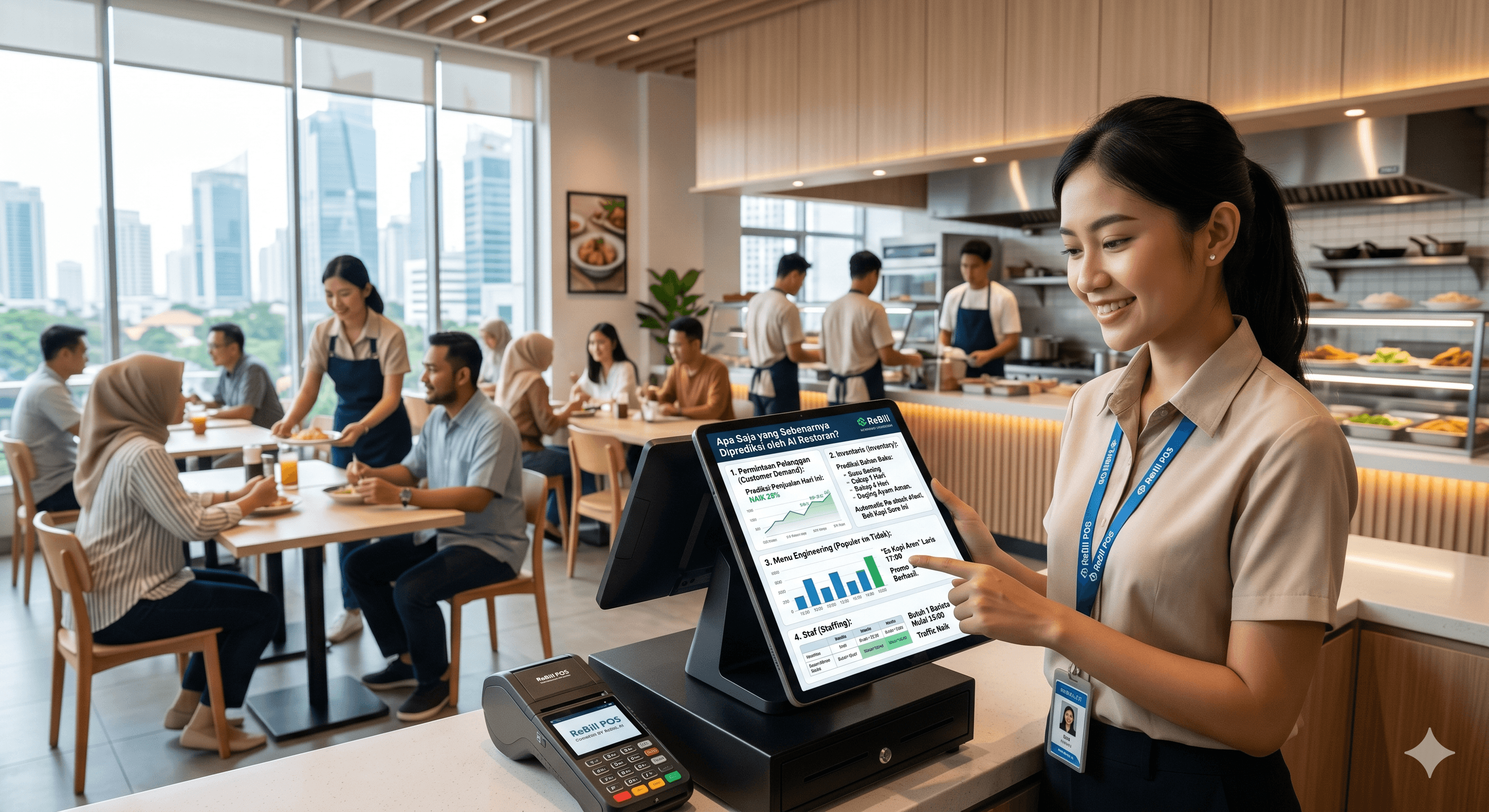
Restaurant AI forecasting technology doesn't work like a magic crystal ball, but rather analyzes patterns from piles of restaurant big data to generate actionable business projection reports. Here are the things predicted by this F&B operational software:
- Daily & Hourly Transaction Volume: Predicting exactly when peak hours (peak hours) will occur, so you know when to accelerate service speed.
- Specific Menu Popularity (Menu Engineering): Knowing that the demand for Iced Latte will spike on a hot day, or that comfort food menus will sell out during the rainy season.
- Warehouse Raw Material Needs: This is widely known as AI inventory forecasting, where the system predicts exactly how many grams of coffee beans, kilograms of meat, or liters of milk will run out next week based on daily sales trends.
Comparison Table: Traditional Forecasting vs Restaurant AI Forecasting
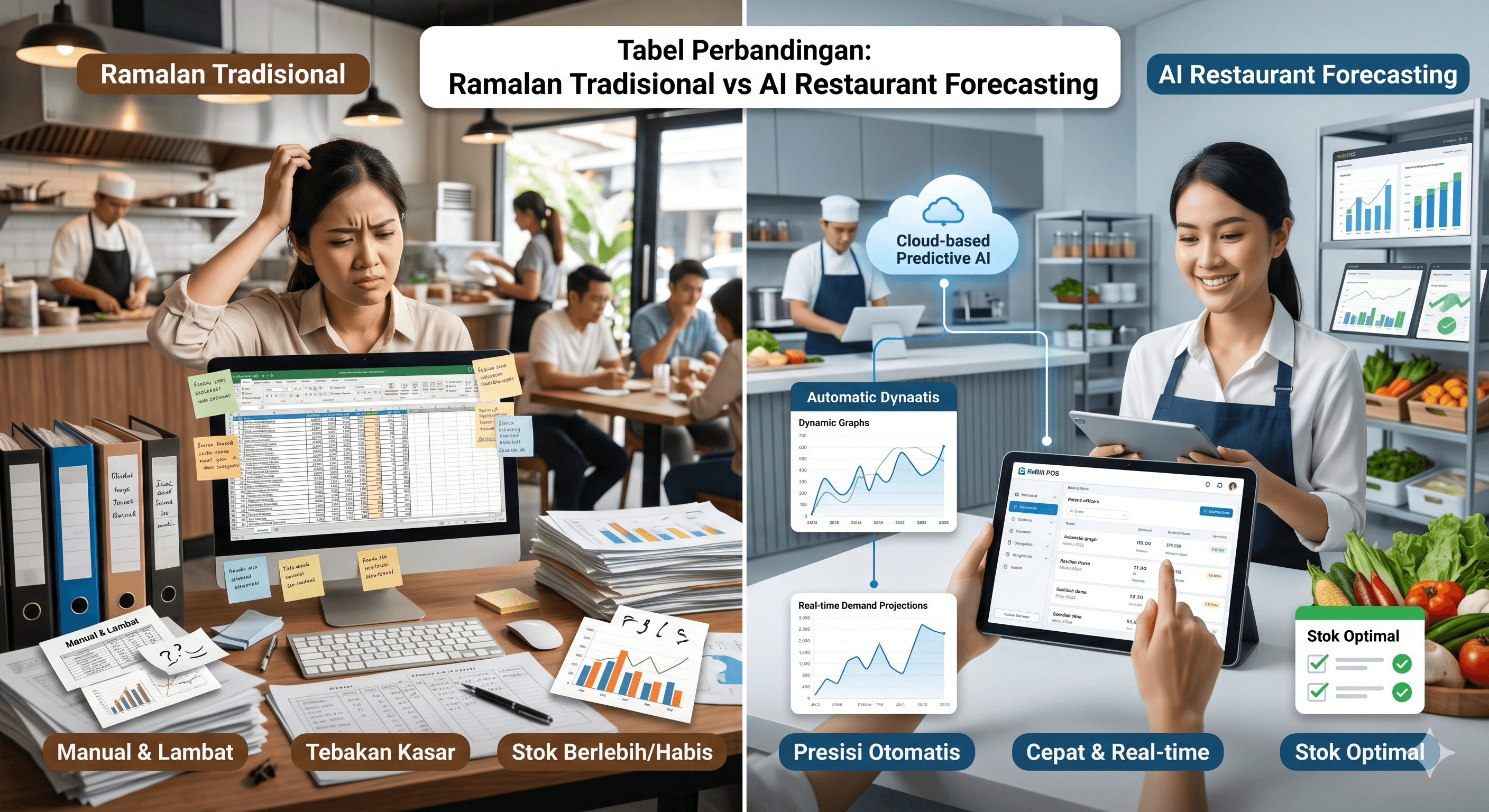
To see how much efficiency is offered, let's compare the manual method with AI technology:
| Operational Metric | Traditional Forecasting (Manual/Excel) | Restaurant AI Forecasting (Integrated POS) |
|---|---|---|
| Prediction Accuracy | Low (Based on instinct & rough historical data) | Very High (Based on machine learning algorithms) |
| Data Source | Only last month's sales reports | Weather, seasonal trends, local events, & real-time data |
| Data Update | Weekly / Monthly | Automatic & Real-time every minute |
| Labor Management | Prone to Overstaffing & Understaffing | Precise shift schedules based on predicted customer traffic |
| Food Waste Level | High (Often over-prep food ingredients) | Very Low (Kitchen prep only matches AI projections) |
Reducing Waste, Overstaffing, and Stockouts in the Culinary Business
The main goal of adopting a restaurant forecasting app is not just to show off sophisticated reporting dashboards, but to achieve actual cost savings (cost reduction) through the following three operational pillars:
1. Reducing Food Waste
Producing too much prepped food in the kitchen (kitchen preparation) is the fastest way to burn capital. With AI, back of house (BOH) operations only process ingredients according to the system's order predictions. This directly optimizes inventory turnover and improves the health of your Cost of Goods Sold (COGS) structure. (Learn more about this financial strategy here: How to Calculate Food & Beverage COGS).
2. Optimizing Labor (Labor Optimization)
Employee payroll expenses (labor costs) are one of the largest expenses for a restaurant. Overstaffing (having too much staff when the cafe is slow) wastes money, while understaffing (shortage of waiters when the restaurant is busy) will destroy the customer experience. AI helps restaurant HR managers arrange efficient employee shift schedules according to predicted visitor spikes.
3. Preventing Stockouts (Running Out of Raw Materials)
A sold out menu or running out of a best-seller raw material during lunch hour is the same as throwing away potential revenue. Automated inventory apps with smart predictions ensure you restock from suppliers on time, keeping inventory levels (par levels) consistently safe.
What Data is Needed by a Smart POS System?
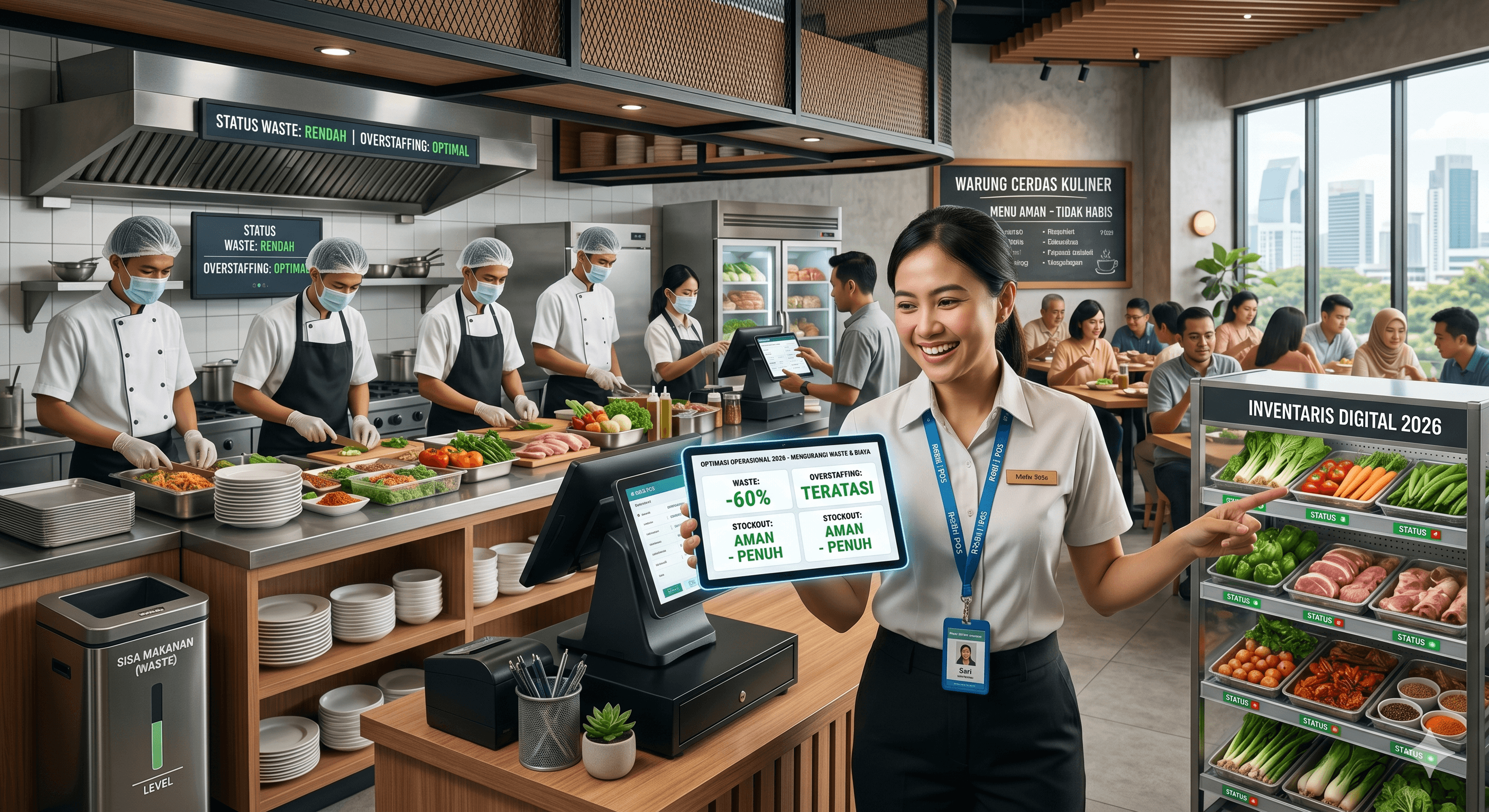
For artificial intelligence to provide accurate F&B sales trend projections, it needs "fuel" in the form of clean, centralized, and consistent historical data from your cafe's cash register system. POS analytic reports that are generally processed include:
- Historical Sales Data: Transaction history from previous months, quarters, or years.
- Seasonal Trends & National Holidays: Consumer crowd patterns on weekends (weekend traffic), paydays, or fasting/Eid months.
- Inventory Movement & Recipe Usage: The speed at which a raw material runs out (depletion rate). Therefore, it is crucial to have a Digital Inventory Management for Restaurants & Coffee Shops 2026 system that integrates directly with the cashier (front of house).
- External Factors (API Integration): In an advanced POS ecosystem, AI absorbs local weather data or major events around the restaurant's location to forecast surges in dine-in or online delivery.
Forecasting Workflow for Cafes and Restaurants
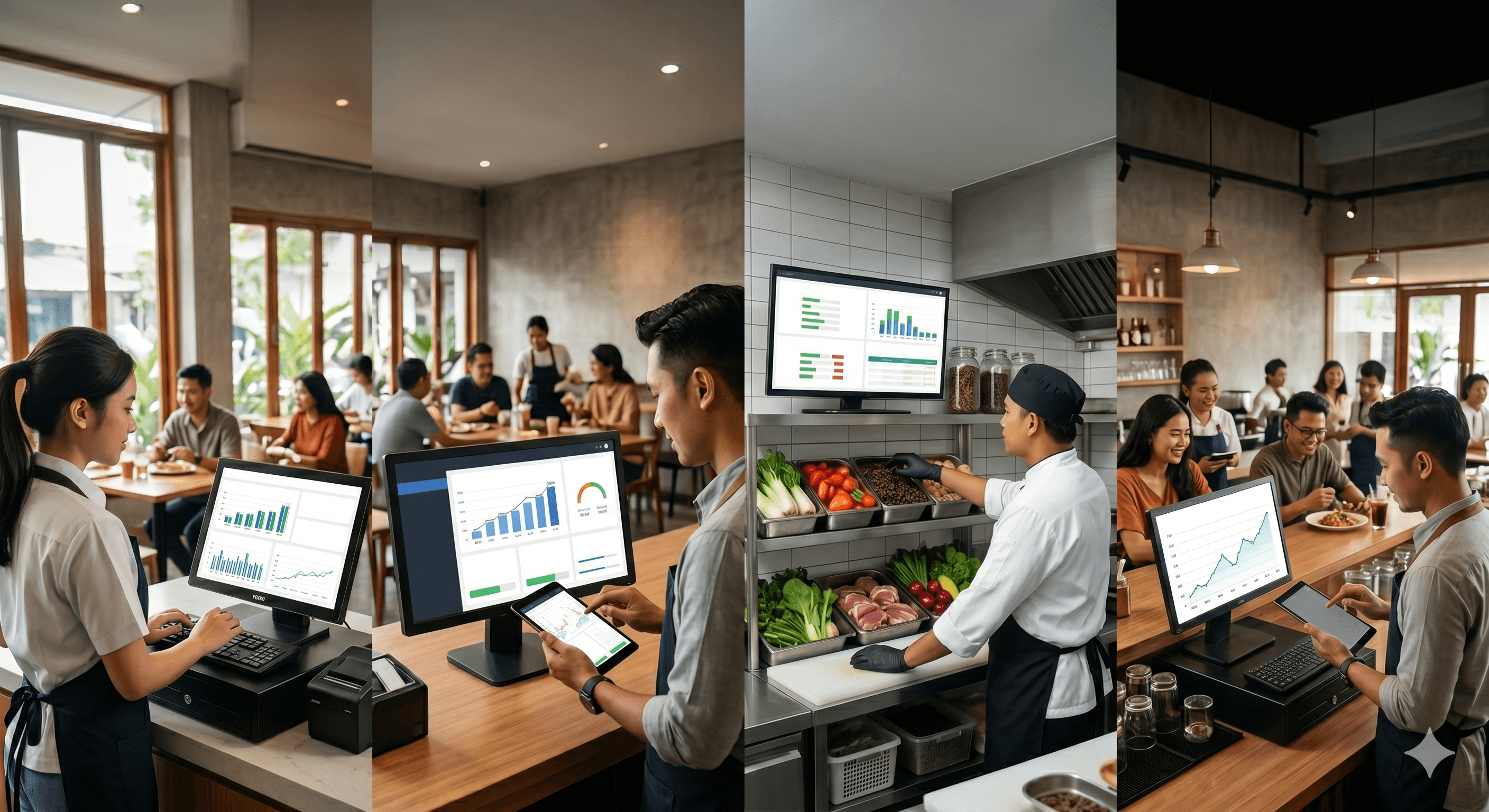
How do you implement this smart restaurant management technology into your daily operational routine (SOP)? Here is the workflow:
- Sales Data Collection: All customer transactions, discounts, and raw material usage based on recipes (recipe management) are recorded in real-time through the restaurant cashier application.
- AI Predictive Analysis: The cloud POS system processes historical data to generate kitchen raw material requirement projection reports for the next 7 to 14 days.
- Shopping Planning (Purchasing & Procurement): The purchasing manager uses AI projection results to create precise Purchase Orders (POs) for vendors or food suppliers, avoiding overstock.
- Periodic Inventory Audit: Validate and adjust software predictions by performing physical counts in the warehouse. (Read the complete stock management guide at: Warehouse Stock Opname Guide & SOP Report).
Common Mistakes in Restaurant Forecasting
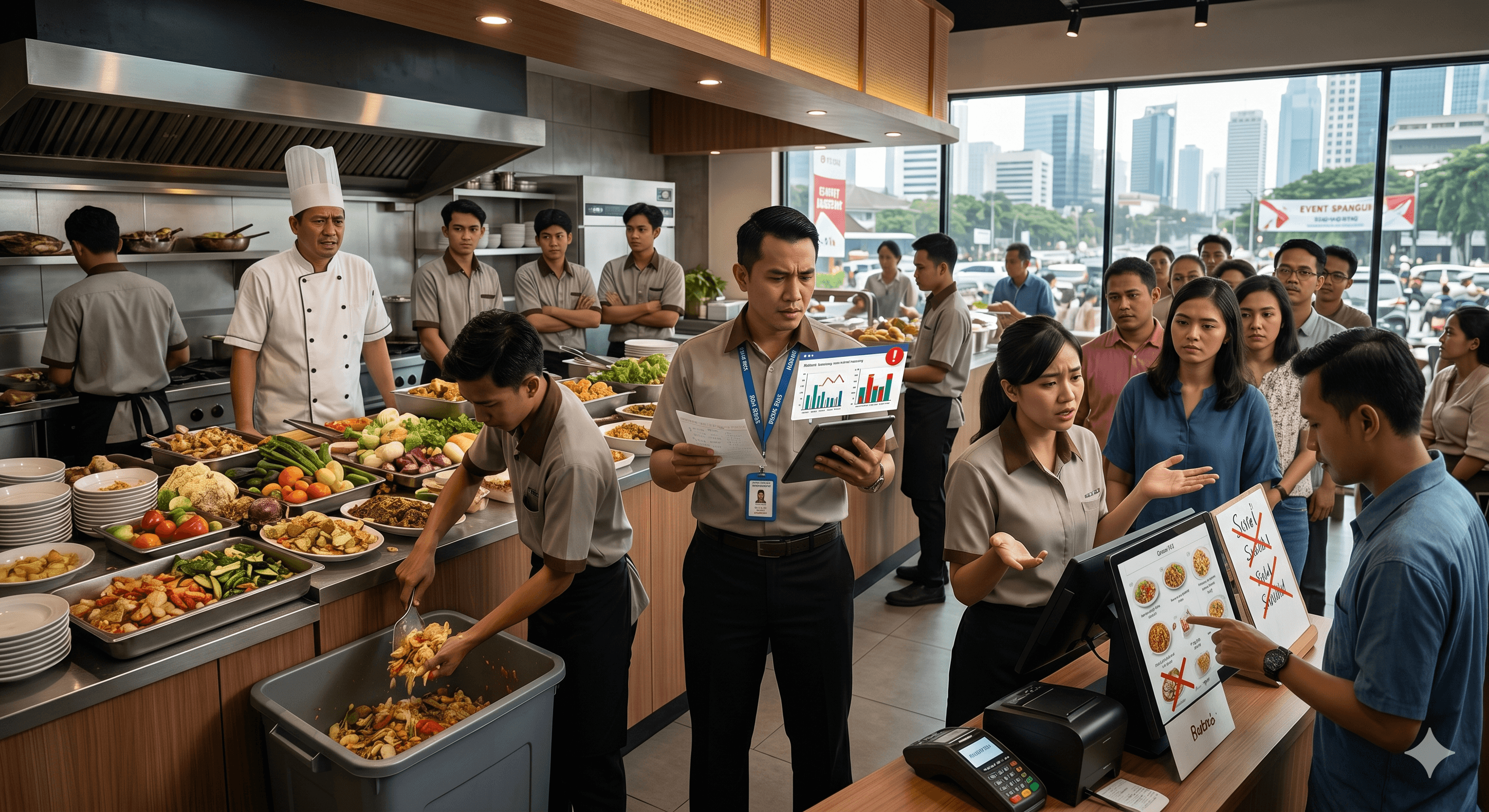
Despite using modern restaurant management applications, there are several human error execution mistakes that often occur in the field and ruin prediction algorithms:
- Messy Cashier Data Input: AI inventory forecasting cannot predict correctly if the cashier frequently presses the wrong menu button, is too lazy to record voids/waste, or if the recipe management (BOM - Bill of Materials) is not set up accurately in the back-office system.
- Separated Systems (Siloed Software): Using a point of sale cashier system from a different brand than the warehouse/inventory system will cause disconnected data, slow synchronization, and missed prediction guesses.
- Ignoring Local Context (Blind Trust): Although AI restaurant operations provide sophisticated numbers, the branch manager's instinct and experience are still needed if there are sudden external anomalies (e.g., road closures in front of the restaurant due to repairs that the system cannot read).
How Does ReBill POS Support This Operational Workflow?
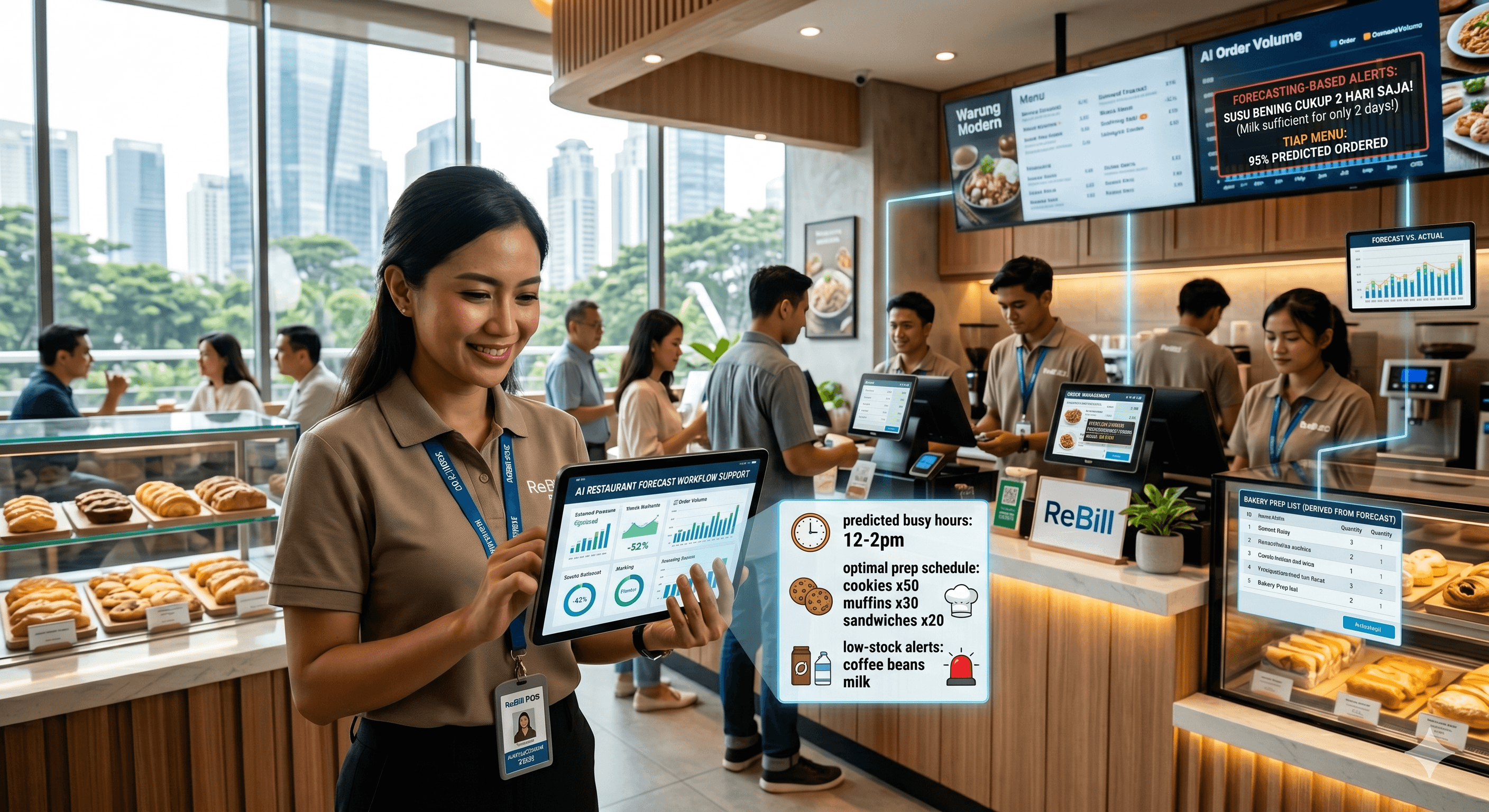
To achieve maximum efficiency and reduce fund leakage through restaurant AI forecasting, you need a robust data infrastructure (omnichannel POS). ReBill POS is specifically designed as the operational command center for your culinary business.
The ReBill system automatically records every data point via the cloud—from customer orders at the table and payment integrations, to precise raw material stock reduction (ingredient-level tracking). With deep POS analytic capabilities, ReBill helps F&B business owners identify sales trends, send low-stock notifications when raw materials run low, and provide data-driven insights to plan raw material shopping (supply chain) that is more efficient and cost-effective.
Want to know what other technological features are crucial for automating your business and securing the profitability of your coffee shop or restaurant? Be sure to check out the Must-Have Restaurant POS Features so your F&B operations are ready to face the fierce competition in 2026.